Trends ·
A smoke alarm as a signal of trust, not only a rule
Research shows that visible safety equipment raises a guest’s sense of safety, while also revealing how often this equipment is lacking in practice.
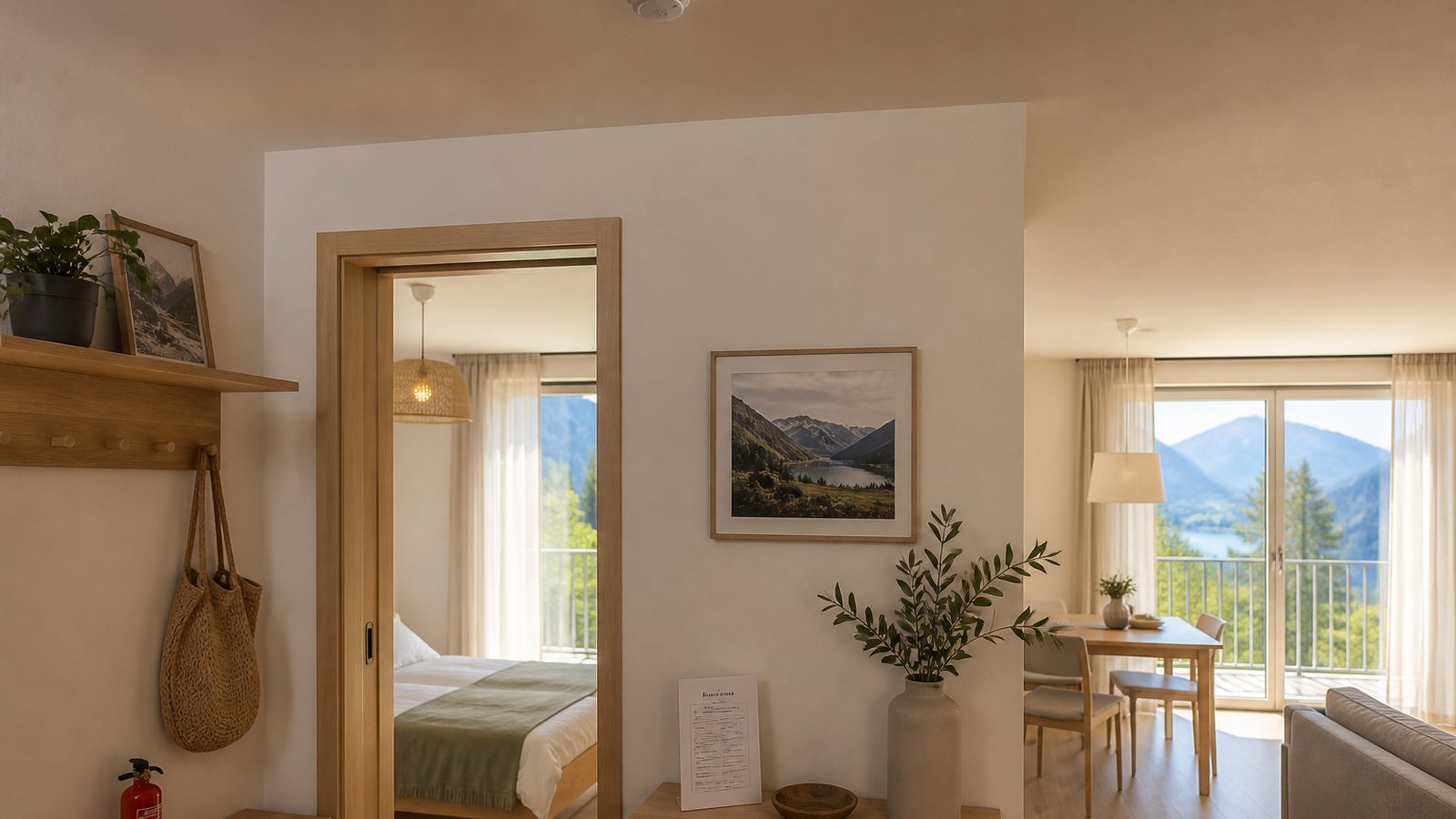
When a guest first opens the door of a property, they form an impression of the host before you exchange a word. Part of that impression – perhaps more than you would expect – is built by things we barely notice: a smoke alarm on the ceiling, a fire extinguisher in a visible place, a sheet with emergency exit directions.
What research says about safety and trust
A large analysis of guests’ experiences with properties showed that safety equipment – smoke and carbon monoxide alarms, fire extinguishers, first aid, locks on rooms – has a direct positive effect on how the guest rates the whole stay. Researchers link this to a known pattern: unlike hotels, guests in private properties more often feel uncertainty, unfamiliarity with the space and distrust, and safety equipment addresses that feeling directly, before an actual emergency ever happens.
The gap that research reveals
The other side of this story is less encouraging. A large analysis of more than 120,000 properties in American cities showed that 80% of hosts reported a smoke alarm, about 58% a carbon monoxide alarm, 42% a fire extinguisher and only 36% a first-aid kit. That is substantially less than is generally required and taken for granted in hotels – and in private properties the equipment often remains entirely down to the host themselves.
Researchers also note that these are figures hosts themselves enter when they publish – nobody checks whether the equipment actually exists and whether it works. That means the gap between what is written in the description and what the guest actually finds in the room is one of the more unnoticed, yet important, sources of disappointment and distrust.
What this means for you
- Make sure basic safety equipment is truly present and working – a smoke alarm, ideally also carbon monoxide, and at least a basic first-aid kit. This is not only a formality; it is one of the few unnoticed signals that actually put a guest at ease.
- Make it visible, not hidden. A sheet with basic information (nearest emergency department, emergency contact, where the exit is) in a visible place works better than the same information sent in a long message the guest may not have read.
- Check regularly that the equipment works, not only that it was once installed – the battery in a smoke alarm is one of those small things a host quickly forgets, and a guest may need it at exactly the most important moment.
Where Foli can help
Foli of course does not install the physical equipment for you – that stays with you. It does help the information about it reach the guest in a place they actually open: through the personal link the guest receives before arrival, alongside the Wi-Fi password and access directions, you can also share key safety information (where the fire extinguisher is, what to do in an emergency, an emergency contact). Safety then is not only a line in the property description the guest may have skimmed, but part of the same practical directions they actually read.
Safety equipment rarely comes up in conversation until it is too late. Yet according to the data, it is one of those quiet factors that put a guest at ease before they even ask themselves whether they can trust the host.
Foli · Zala Rosa d.o.o. · Metelkova ulica 15, 1000 Ljubljana · [email protected] · www.hellofoli.com